Mahmudul Hossain
Google Ads & Conversion Tracking Specialist
3 October 26
6 min read
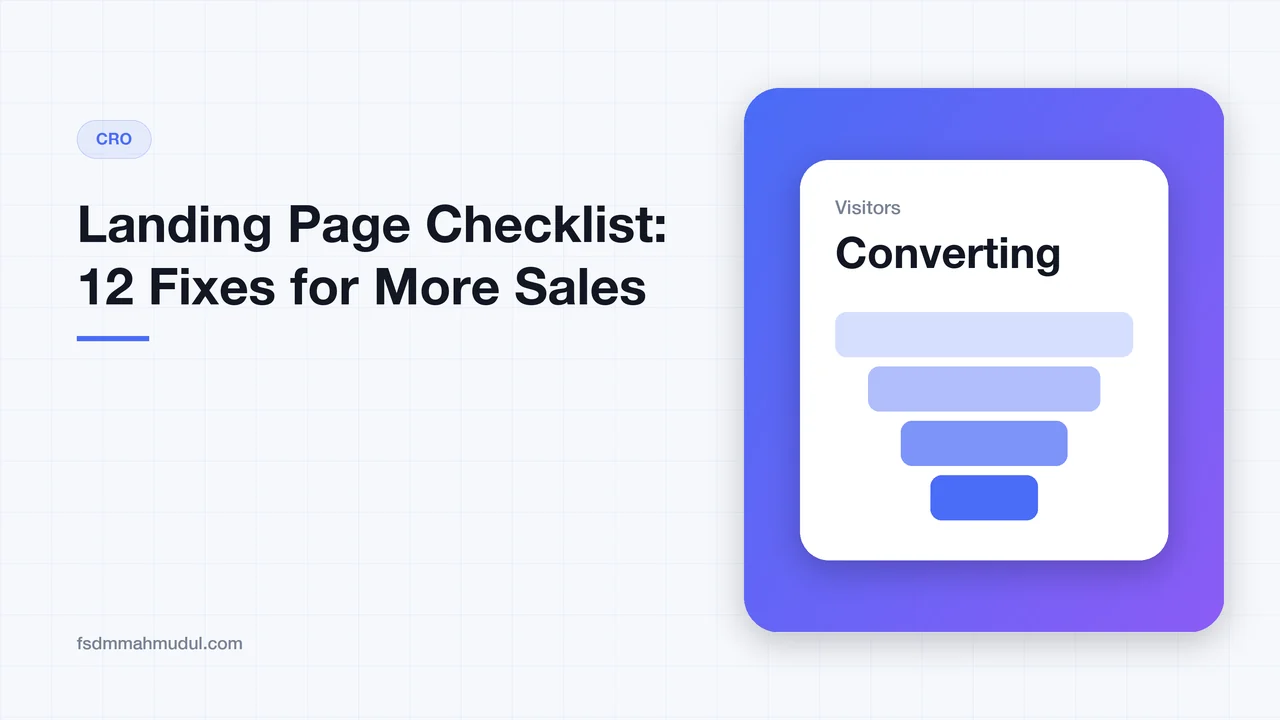
Illustration by Fsdm Mahmudul
You can have the best ads in your market and still lose money if the page behind them does not convert. Most visitors decide in a few seconds whether to stay. This landing page checklist covers 12 practical fixes that help more of your paid clicks turn into sales, bookings or leads.
A landing page is simply the page someone lands on after clicking your ad. CRO, short for conversion rate optimisation, means improving that page so a bigger share of visitors take action. You do not need a redesign to start. Most of these fixes take hours, not weeks.
Our team works through this exact list in our conversion rate optimisation service, and you can use it yourself today.
Every click costs money. If 100 people click your ad and only one buys, each sale carries the cost of 99 wasted visits. Improve the page so two people buy, and your cost per sale roughly halves without spending a penny more on ads.
Better pages also help your ad platforms. Google Ads and Meta both reward pages that keep people engaged, and more conversions give their algorithms more data to learn from.
This is why we look at the page before we touch the budget. In our experience, the fastest wins in a struggling account often come from the landing page, not from new ads or bigger spend. Fix the leaks first, then scale what works.
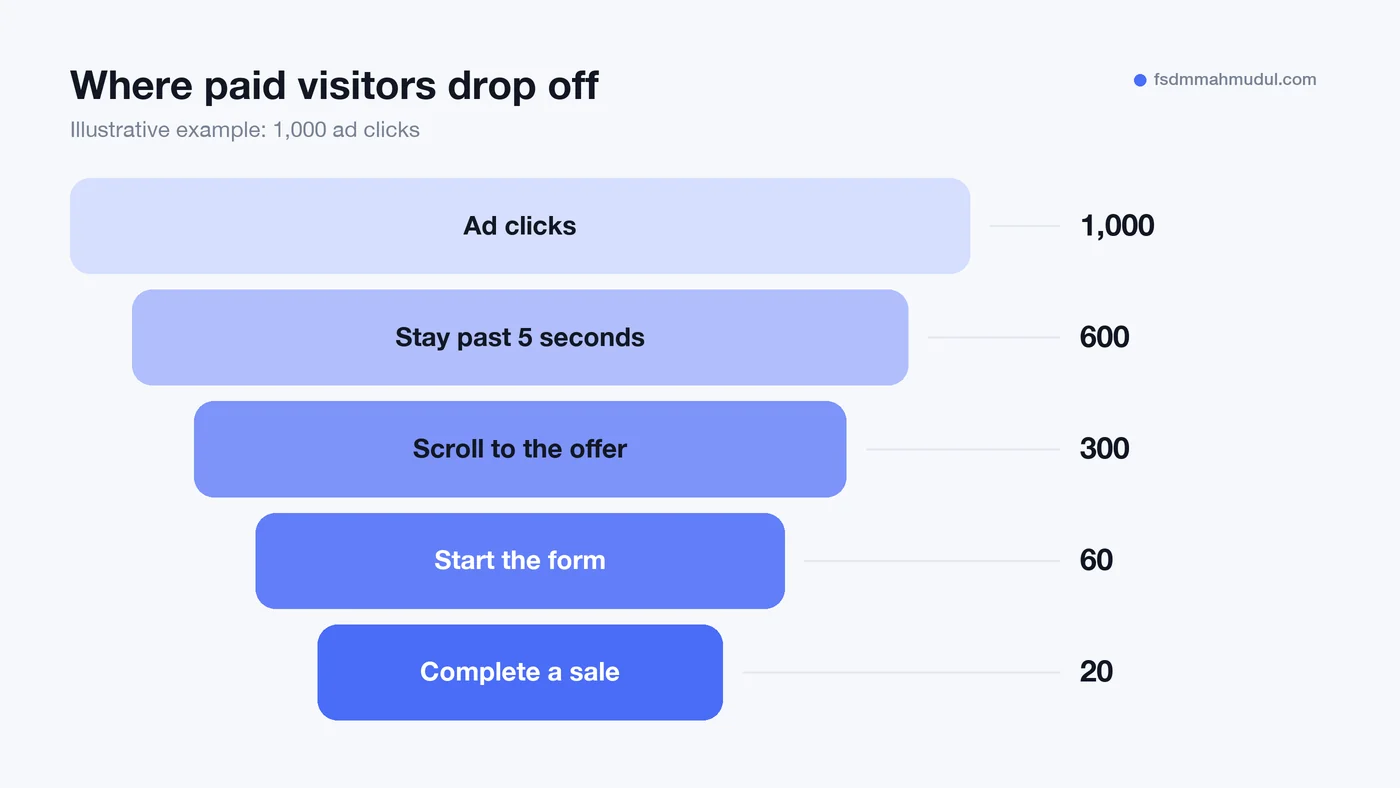
Work through these in order. The first few fixes usually have the biggest effect.
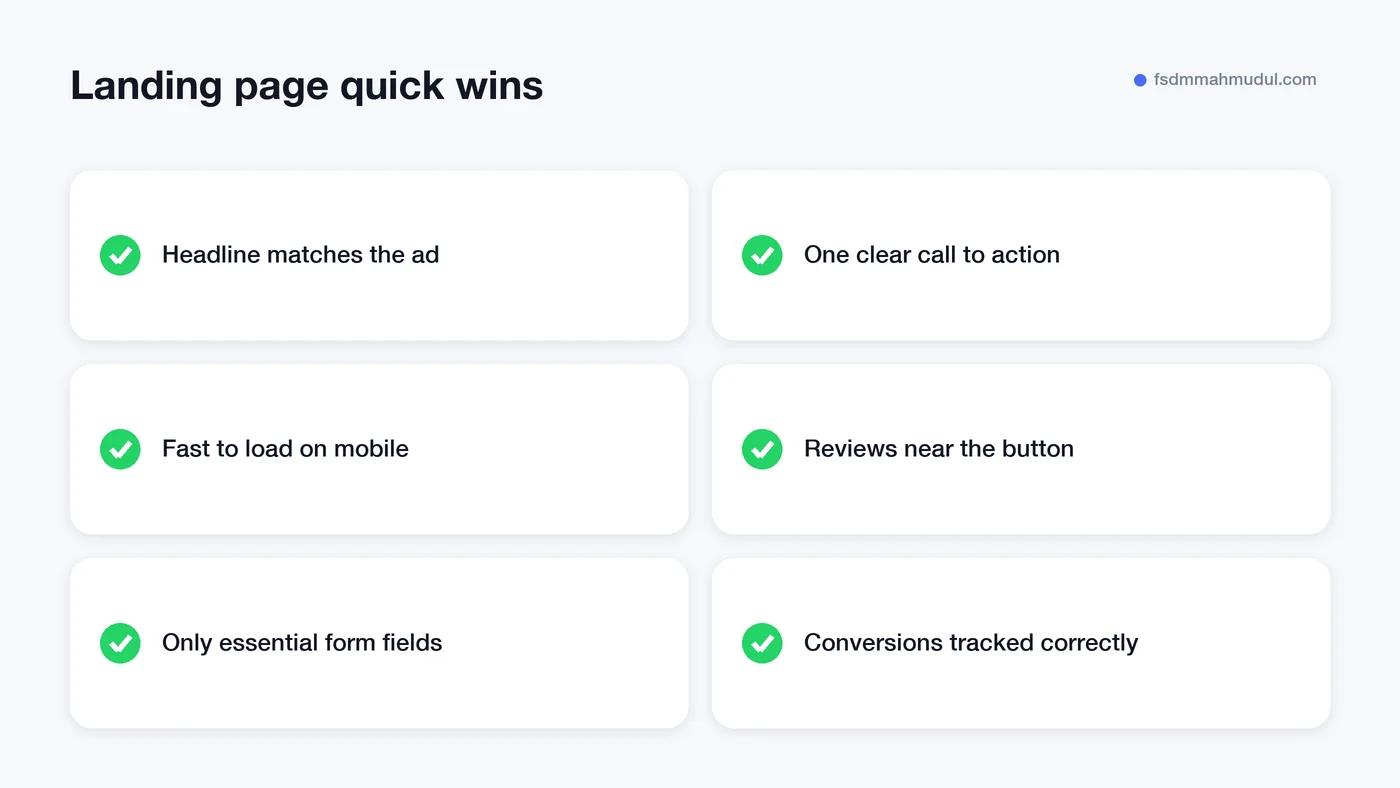
Use this table to score your page. Mark each item as done, partly done or missing, then fix the missing ones first.
| Area | Check | Why it matters |
|---|---|---|
| Message | Headline matches the ad | Visitors know they are in the right place |
| Message | One clear call to action | Fewer choices, faster decisions |
| Speed | Loads quickly on mobile | Slow pages lose visitors before they see anything |
| Trust | Reviews near the button | Proof at the moment of decision |
| Trust | Clear prices and returns | Removes reasons to hesitate |
| Forms | Only essential fields | Less effort, more completions |
| Tracking | Conversions recorded correctly | You can see what actually works |
Change one thing at a time when you can. If you rewrite the headline, swap the images and move the button all at once, you will not know which change helped.
For pages with plenty of traffic, run an A/B test. That means showing two versions to different visitors and comparing results. For smaller sites, make one change, wait two to four weeks and compare conversion rates with the period before.
Keep notes of every change and its date. It sounds boring, but it saves you from repeating failed ideas later.
Also watch the quality of results, not just the number. A shorter form might bring more leads, but if half of them are not real buyers, it has not helped. Check sales or booked jobs, not only form fills.
These are the problems we find most often when auditing paid traffic.
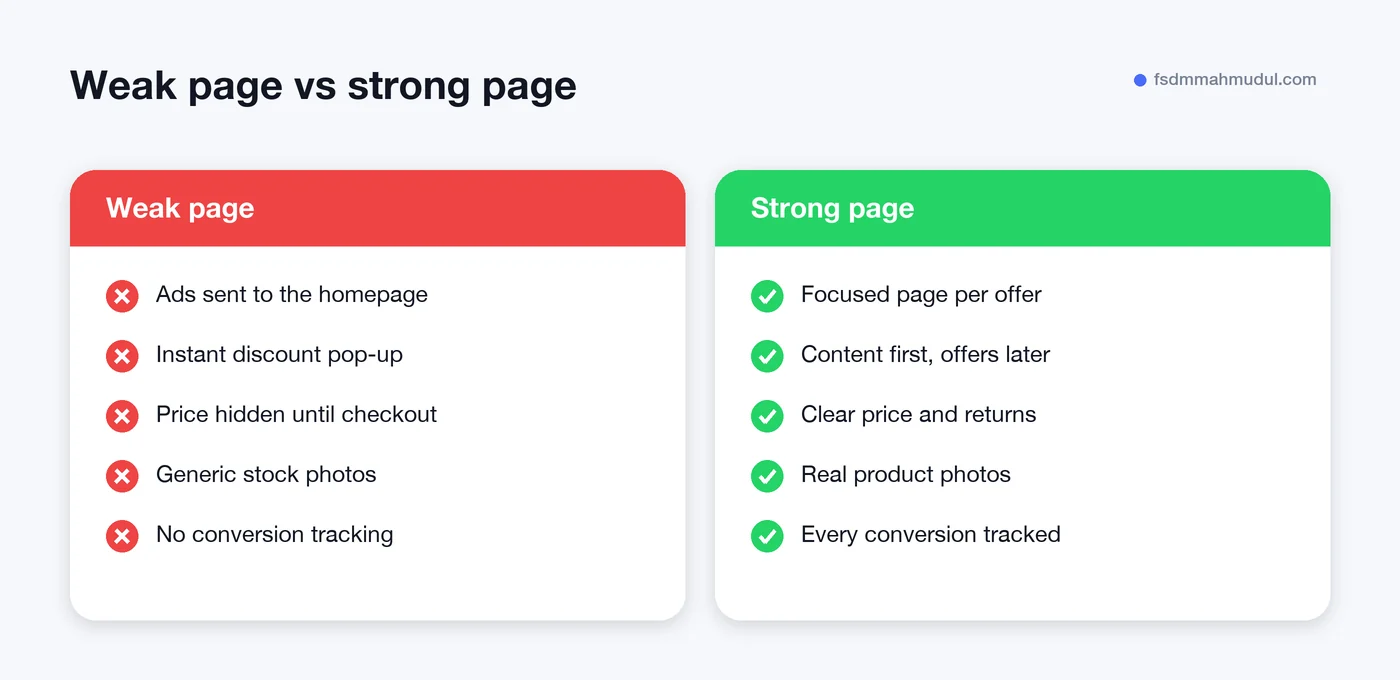
If your ads get clicks but the sales never follow, the page is often only part of the story. Our guide on why Google Ads are not converting covers the targeting and tracking causes too. You can also see examples of page improvements in our CRO portfolio work.
It depends on your industry, price point and traffic source, so there is no single right number. A better benchmark is your own past performance. Track your current rate, make improvements and aim to beat it month on month.
One main action is best. You can repeat the same button several times down a long page, but every button should lead to the same goal. Secondary links, such as a phone number, are fine if they support that goal.
Not for every ad, but usually for each main product, service or offer. The closer the page matches what the ad promised, the more likely people are to act. A local business might have one page per service and area.
Simple fixes like headline changes or shorter forms can show results within a few weeks if you have steady traffic. Lower-traffic sites need longer to gather enough data. The key is to measure properly so you know a change truly helped.
You are already paying for the traffic. Working through this landing page checklist helps more of those visitors buy, book or enquire, without raising your ad budget.
Want a second pair of eyes? Request a free landing page and ads audit and our team will point out the fixes most likely to lift your sales.
We can review your current setup and show which issue should be addressed first.
Get My Free AuditHere are answers to the questions people ask us most. Can't find yours? Message us and we usually reply within an hour.

We review your campaigns, tracking or conversion journey, then show you the main issue limiting performance, its business impact and a practical next step.
Yes. Most clients start from $1,000 a month in ad spend. We will tell you honestly if your budget is too small.
A dedicated specialist from our team runs your account day to day, and Mahmudul oversees the strategy and reviews the results. You always have one point of contact, so you never have to chase anyone.
No. Work is month to month and you can cancel any time.
Always. Your accounts, campaigns and tracking stay yours, even if we stop working together.
Wasted spend usually drops in the first 2 weeks. Steady growth shows by month 2 or 3.
Clients in Bangladesh, the US, UK, Canada, Australia and Europe. Our team works across time zones.
Request a free audit or message us on WhatsApp. We confirm the audit is a good fit, share our findings or invite you to a review, then agree the next step with Mahmudul.
Yes. Our tracking specialist checks that every sale, lead and call is counted correctly, because good ads need good data.
Yes. We send clear, simple notes your developer can follow, or our own developer makes the changes for you.
With a team. Mahmudul leads a small group of specialists in ads, tracking, page design and website development. Each person works on what they know best, and Mahmudul checks the work before it reaches you. If someone is away, another team member covers for them, so your work never stops.
You get a simple monthly report showing what we spent, what we got back and what we will do next. Mahmudul reviews every report before it is sent.